
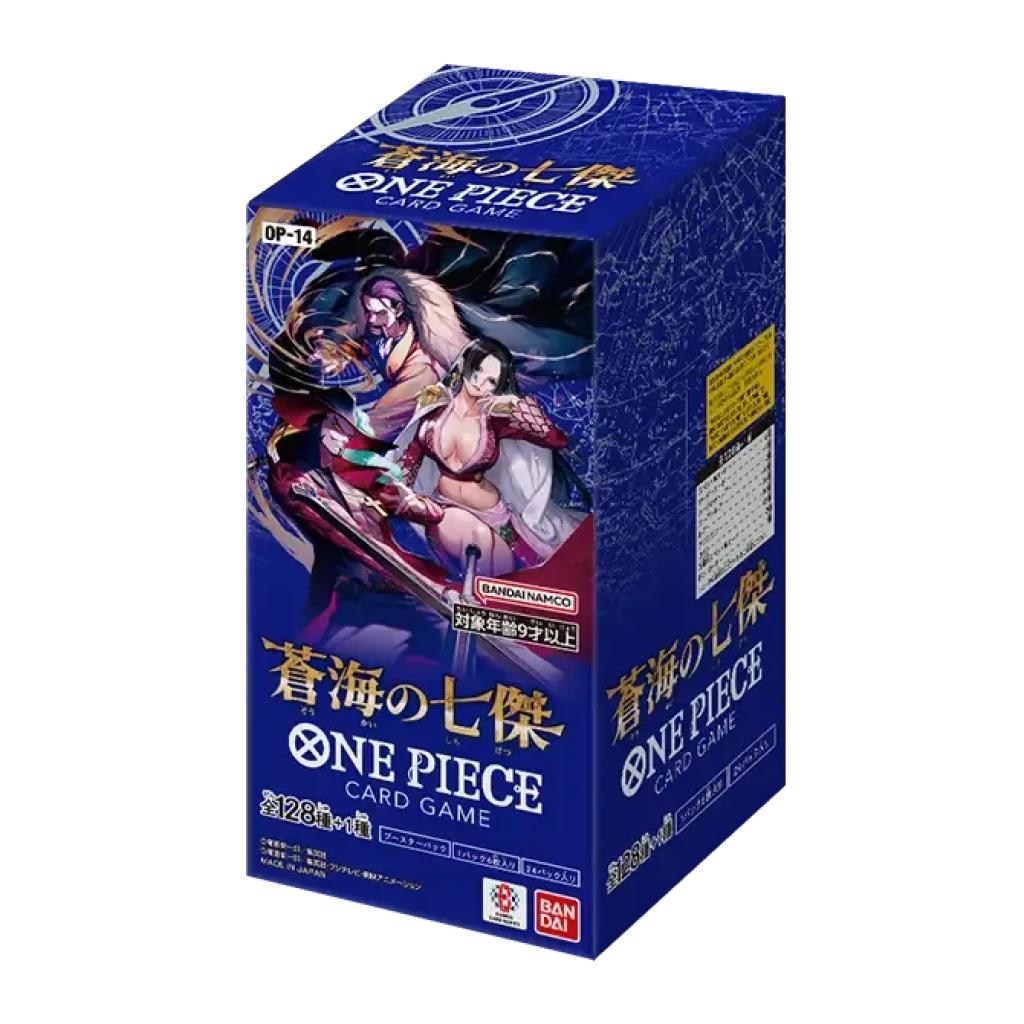
OP-14 The Azure Sea’s Seven Booster Box
Overview of OP-14 The Azure Sea’s Seven Booster Box
The OP-14 The Azure Sea’s Seven Booster Box is one of the most anticipated releases in the One Piece Card Game (OP TCG), especially within the Japanese market where early releases often shape global price trends. While Pokémon cards dominate the global TCG landscape, the One Piece TCG has rapidly carved out a strong niche, attracting collectors, anime fans, and serious investors alike. Much like Pokémon expansions, OP-14 introduces new mechanics, character cards, and highly sought-after alternate arts that drive both gameplay and collectible value.
Each booster box typically contains multiple packs with a structured rarity system, making it a prime target for both sealed collectors and those hunting for high-value pulls. The Japanese version, in particular, often features sharper print quality and earlier access to meta-defining cards, which increases its desirability in the secondary market.
Card Rarity System and Pull Rates
Understanding rarity is essential for maximizing value when opening or holding sealed product. Like Pokémon TCG sets, OP-14 uses a tiered rarity structure that directly influences market demand and resale potential.
- Common (C) & Uncommon (UC): Primarily gameplay-focused, low resale value
- Rare (R): Moderate playability, occasional demand spikes
- Super Rare (SR): Competitive staples with steady value
- Secret Rare (SEC): Highly limited, strong collector demand
- Alternate Art (AA): Premium collector pieces, often the most valuable cards
Alternate Art cards function similarly to Pokémon’s full-art and illustration rares—visually striking, limited in pull rate, and often commanding the highest prices. Pull rates in Japanese booster boxes tend to be more predictable, making them appealing for calculated openings.
Market Value Trends and Investment Potential
The value of OP-14 booster boxes and individual cards is driven by a combination of factors: character popularity, competitive viability, artwork quality, and print scarcity. Cards featuring iconic characters like Luffy, Zoro, or Shanks tend to perform similarly to Pokémon’s Charizard or Pikachu equivalents—consistently strong demand regardless of meta shifts.
Key investment insights include:
- Sealed booster boxes often appreciate faster than opened singles over time
- Early acquisition (pre- or immediately post-release) yields the best ROI
- Graded Alternate Arts can multiply value significantly
- Meta-relevant cards spike during tournament seasons
Collectors transitioning from Pokémon will recognize similar patterns: nostalgia, character popularity, and scarcity drive long-term value more than gameplay alone.
Grading Strategies for Maximum Value
Professional grading plays a crucial role in the high-end TCG market. Whether using PSA, BGS, or CGC, grading can transform a raw card into a premium collectible. Japanese OP-14 cards often grade higher due to superior print quality, making them ideal candidates for submission.
To optimize grading results:
- Inspect centering, edges, corners, and surface before submission
- Prioritize Alternate Arts and Secret Rares
- Use protective sleeves and top loaders immediately after pulling
- Avoid handling cards unnecessarily
A PSA 10 Alternate Art from OP-14 could command several multiples of its raw price, mirroring trends seen in high-grade Pokémon cards.
Collecting Strategies for Beginners and Experts
Whether you’re new to trading card games or an experienced Pokémon collector entering the One Piece market, strategy matters. OP-14 offers multiple entry points depending on your goals.
For Beginners:
- Start with sealed booster boxes for a mix of excitement and value
- Focus on collecting favorite characters
- Learn rarity tiers before making large purchases
For Advanced Collectors:
- Target graded Alternate Arts for long-term holds
- Diversify between sealed product and singles
- Monitor Japanese vs. English price gaps for arbitrage opportunities
A balanced portfolio—similar to Pokémon investing—often yields the most stable returns.
Sealed vs. Opened: What’s the Better Investment?
One of the most debated topics in TCG collecting is whether to keep booster boxes sealed or open them. With OP-14, both strategies have merit depending on your goals.
- Sealed Boxes: Lower risk, long-term appreciation, collector demand
- Opening Packs: Higher risk, potential for high-value pulls
Historically, sealed products—especially from early or popular sets—tend to outperform individual cards unless you pull top-tier hits. This mirrors the Pokémon market, where sealed booster boxes often become scarce and highly valuable over time.
![Shepherd Ju Peter [R/P] {OP13-084}](https://monsterdexhub.com/wp-content/uploads/2026/05/s-l1600-4-e1758068931920-300x300.webp)


Reviews
There are no reviews yet.